
Come and hear how farmers, science, and policy can shape tomorrow’s food systems
8 September 2026
A public lecture examining what a resilient future for farming really looks like, and how farmers, researchers, and industry leaders can work together to make it a reality, will take place at the Royal Agricultural University (RAU) later this month.
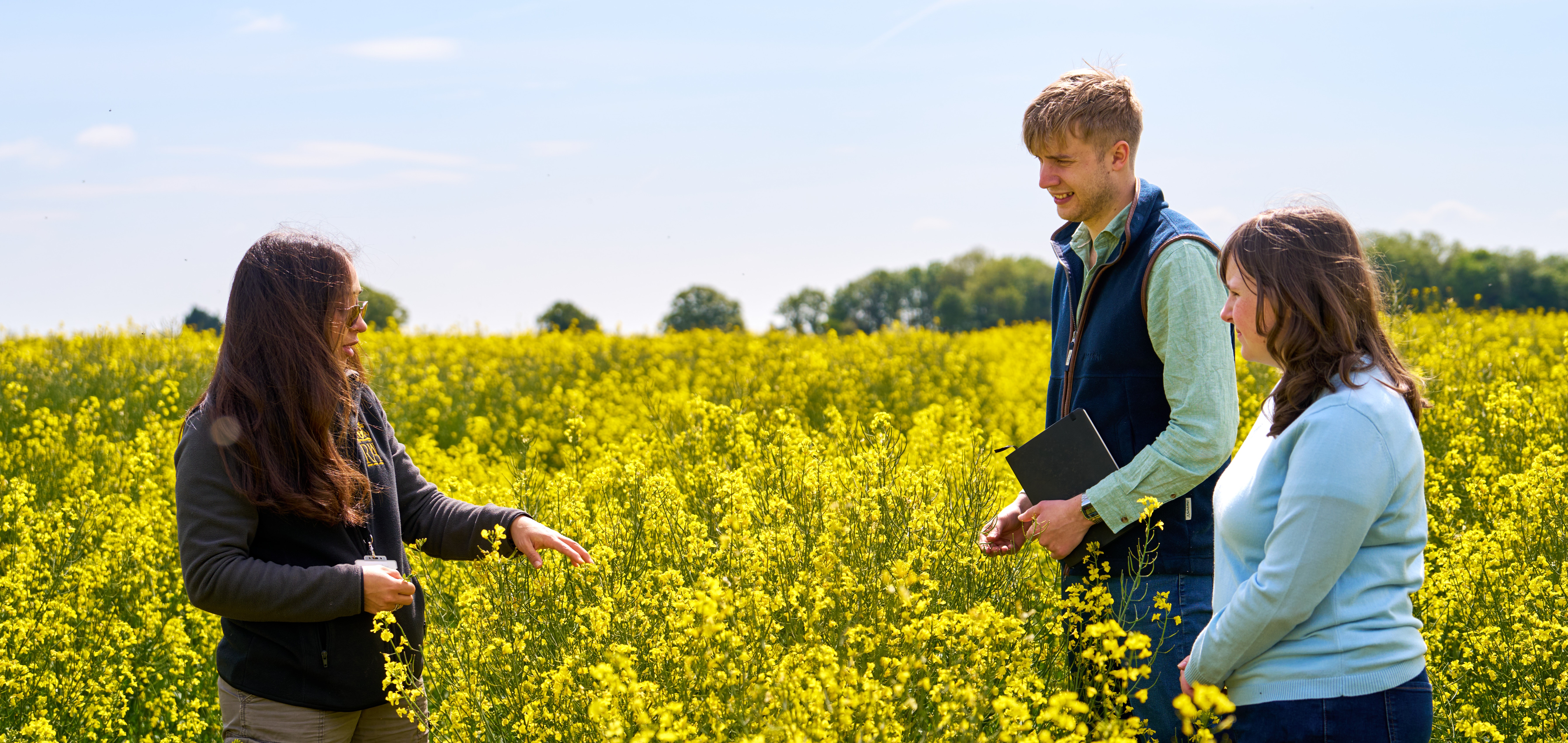
In the free lecture, Farming for a resilient future, Dr Karen Rial-Lovera, Co-Dean of Agricultural Science and Practice at the University, will explore what research tells us about building more resilient and sustainable farming and food systems, and the role that farmers, science, and policy can play in making this actually happen.
Karen said: “When we talk about the future of farming, it’s easy to focus on how we can produce more, but resilience is about much more than productivity. It’s about building farming systems that can cope with drought, extreme weather, changing markets, and other shocks, while continuing to produce food and support viable farm businesses.
“Regenerative and agroecological approaches have an important role to play in that. We have a growing body of research showing that how we manage our soils, nutrients, crops and wider farm systems can make a real difference to resilience.
“Agroecological practices can offer some really interesting opportunities, but there isn’t a one-size-fits-all solution and context matters. What works needs to make sense for the particular farm, landscape and business. That’s why bringing research together with farmers’ experience and knowledge is so important.”
After her initial lecture, Karen will then be joined by two RAU alumni who now work as farm managers - Annie Landless from Ampney Brook Farm near Cirencester and Henry-James Gay from Broadfield Farm, Tetbury - to explore the opportunities and challenges of putting ideas into practice on farm, from changing farming approaches to responding to climate, markets, policy, and wider pressures.
Karen added: “This summer has been a very real reminder that the challenges we talk about in climate and food-system research are not some distant future. Extreme weather is already affecting UK agriculture, from crops and soils, to water availability and farm profitability.
“The question is not whether farming needs to adapt, but how we can make those changes work in practice - environmentally, economically, and for the farmers who have to deliver them.”
Farming for a resilient future is part of a second annual series of free public lectures at the Cirencester-based university. The first series took place last year to celebrate the 180th anniversary of the institution which was founded in 1845 as the first agricultural college in the English-speaking world.
The free public lecture will take place in the University’s Emrys Jones Lecture Theatre (EJ06) at the RAU’s Cirencester campus on Wednesday 23 September 2026. Doors will open at 6pm with refreshments – free tea and coffee and a pay bar – available before the lecture starts promptly at 6.30pm.
For more information, and to book your free ticket(s), please visit https://RAUlecture-farmingforaresilientfuture.eventbrite.co.uk. There is plenty of free parking, and allocated disabled parking spaces, in the University’s Stroud Road car park (GL7 6JS).
RAU Vice-Chancellor Professor Peter McCaffery said: “The global challenges we face today – climate change, food security, sustainable land use, biodiversity loss, and heritage management – are even more daunting than those we faced in the past.
“At the RAU, we have been developing entrepreneurs, innovators, and leaders, in agriculture and the land-based sector, ever since our founding in 1845. We are now seeking to help address this ongoing global emergency through a new generation of graduates and in our capacity as the leading specialist university for research in England.
“We are immensely proud of how our applied research has made a practical difference on the ground. The real key however, to unlocking the potential of innovation in agriculture and the land-based sector, is effective collaboration, communication, and dissemination of best practice. Our 2026 public Professorial Lecture series seeks to do just that.”