
Could the solution to tackling global challenges lie beneath our feet?
2 October 2026
The critical role that our soil - “the very foundation of life on Earth” - plays in food security, climate resilience, and sustainability will be examined at a free public lecture taking place at the Royal Agricultural University (RAU) later this month.
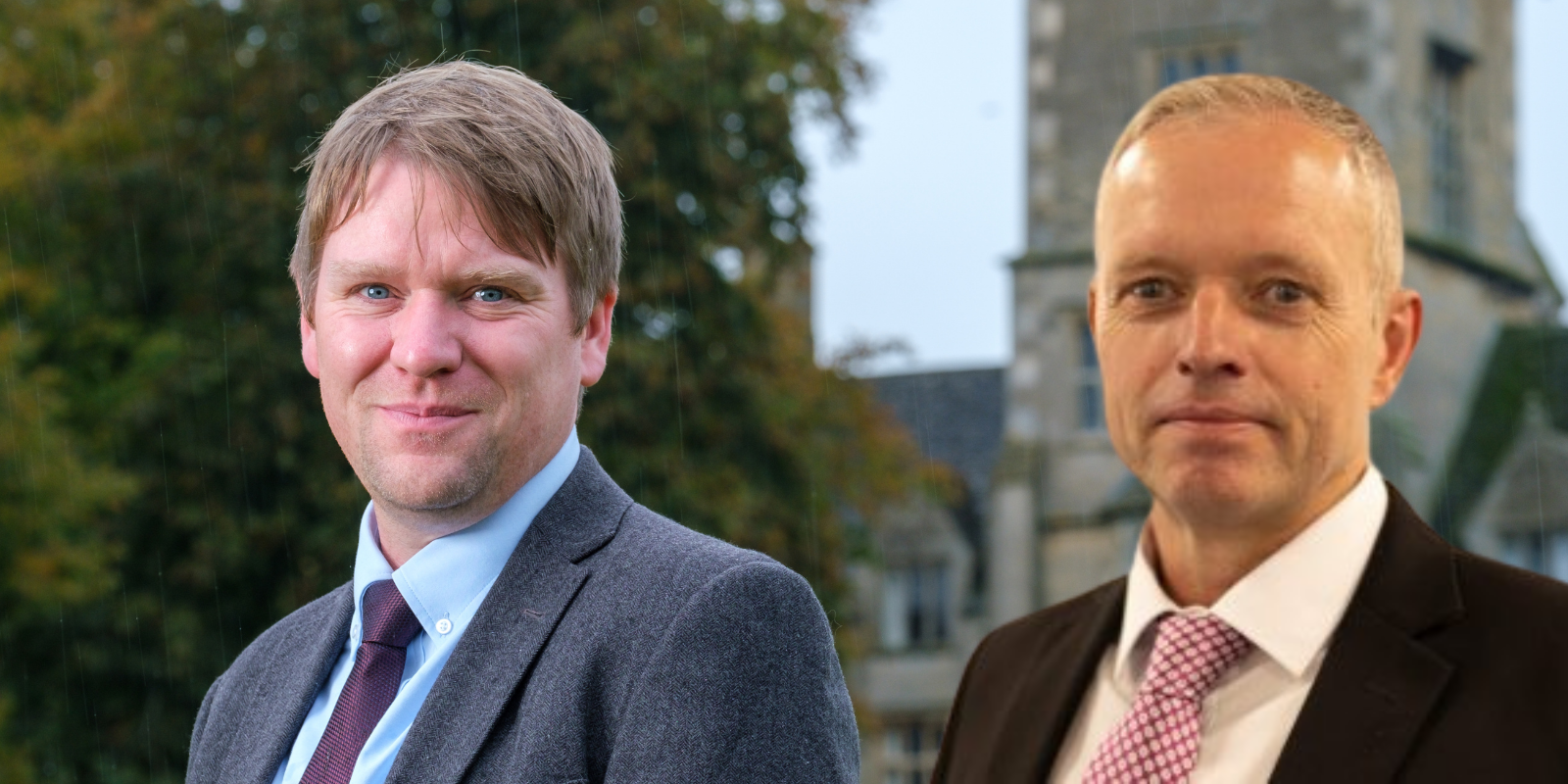
In his inaugural Professorial lecture, Professor David O’Connor, Professor of Sustainable Land Management at the RAU, will be joined by Dr Bruce Lascelles, Director of Sustainable Land Management at Arcadis UK and President-Elect of the International Union of Soil Sciences, to examine the importance of soil as a finite, and increasingly threatened, natural resource and why they believe that sustainable soil management is essential for delivering the United Nations’ Sustainable Development Goals.
David explained: “Soil is one of our most vital, yet often overlooked, natural resources, underpinning food production, supporting ecosystems, and helping against climate change. It is a non-renewable, precious, natural resource that forms the very foundation of life on Earth, playing a crucial role in regulating water, storing carbon, and supporting biodiversity.
“But soil can easily and quickly be contaminated and damaged by pollution, erosion, intensive land use, and other forms of environmental degradation which in turn directly impacts agricultural productivity, water safety, and global food supply chains.
“Soil management must be given greater priority if the world is to address some of its most pressing environmental and food security challenges.”
The lecture - Sustainable soil management: Essential for delivering the UN Sustainable Development Goals - will explore challenges including the impact of heavy metal soil pollution, in areas of farmland affected by war, on food safety and agricultural productivity, an area currently being researched in a partnership between experts at the RAU and at Sumy National Agrarian University, a university close to the front line of the war in Ukraine.
The joint project, which started in 2022, is investigating the extent of war-related pollution in conflict-affected farmland in Ukraine, as well as approaches that could help monitor, manage, and ultimately restore Ukarine’s agricultural soils.
David said: “Through our work at the RAU, including our research on farms in Ukraine which have been impacted by the war with Russia, we are demonstrating that healthy soils are not merely an agricultural concern - they are an essential prerequisite for food safety, ecosystem resilience, and delivering the United Nations’ Sustainable Development Goals.”
The speakers will also discuss the role of soil carbon sequestration, considering both the practical opportunities and scientific limitations of using soil carbon storage as a tool to mitigate global climate change.
David added: “Topsoil takes hundreds of years to form so we urgently need active protection, ecosystem-based management, and policy intervention to protect soil health and prevent permanent loss of this non-renewable resource.”
This lecture is David’s inaugural Professorial lecture as he was promoted to the role of Professor of Sustainable Land Management at the RAU in August. It is part of a second annual series of free public lectures at the university, the first series having taken place last year to celebrate the institution’s 180th anniversary.
The lecture will take place in the University’s Emrys Jones Lecture Theatre (EJ06) at the RAU’s Cirencester campus on Wednesday 14 October 2026. Doors will open at 6pm with refreshments – free tea and coffee and a pay bar – available before the lecture starts promptly at 6.30pm.
For more information, and to book your free ticket(s), please visit https://RAUlecture-sustainablesoilmanagement.eventbrite.co.uk. There is plenty of free parking, and allocated disabled parking spaces, in the University’s Stroud Road car park (GL7 6JS).
RAU Vice-Chancellor Professor Peter McCaffery said: “The global challenges we face today – climate change, food security, sustainable land use, biodiversity loss, and heritage management – are even more daunting than those we faced in the past.
“At the RAU, we have been developing entrepreneurs, innovators, and leaders, in agriculture and the land-based sector, ever since our founding in 1845. We are now seeking to help address this ongoing global emergency through a new generation of graduates and in our capacity as the leading specialist university for research in England.
“We are immensely proud of how our applied research has made a practical difference on the ground. The real key however, to unlocking the potential of innovation in agriculture and the land-based sector, is effective collaboration, communication, and dissemination of best practice. Our 2026 public Professorial Lecture series seeks to do just that.”