
Do you want to know more about sustainability, soil health, and food security?
10 August 2026
Have this summer’s record-breaking heatwaves got you thinking about climate change, crop productivity, soil health, and the sustainability of farming systems…?
If they have, and you are interested in learning more, then it’s not too late to sign up to study at the Royal Agricultural University (RAU) from this September!
While a long hot dry summer may seem like good news for farmers and the annual harvest, the wide-reaching impacts of extreme high temperatures, both in the UK and across the globe, can present a major challenge for those working in the land-based sector.
The increasing frequency and intensity of heatwaves here in the UK is already reducing farmers’ yields as well as accelerating soil degradation and placing the security of our food at risk.
Daniella Miles, Head of Student Recruitment at the RAU, said: “We offer a range of undergraduate courses in agriculture, agricultural business management, environment and sustainability, and wildlife and conservation, and many equine and farm management courses.
“As well as the traditional three-year undergraduate degree programmes, we offer shorter two-year foundation degree courses after which you can do an optional ‘top-up’ year to gain a full Bachelor’s degree if that’s what you want.”
The Cirencester-based university – which was founded as the Royal Agricultural College, the first agricultural college in the English-speaking world, in 1845 - also offers a range of full-time or part-time postgraduate courses.
Daniella added: “All our courses offer experiential learning, with lectures in the field as well as the classroom, and we also have lots of scholarships and bursaries, including the Kaleb Cooper Agriculture Bursary which is exclusive to the RAU and now entering its fourth year, which can help cover the costs of coming to university.
“At the RAU you really are a name, not a number. Our students are at the heart of everything we do and we have a fantastic student support team which is committed to looking after students’ physical, mental, and emotional health throughout their time with us.”
Students can apply now, to start their studies this September, through the University’s Clearing programme.
Daniella explained: “A lot of students are waiting to see what grades they get when A-level results come out later this week and, historically, our Clearing campaign targeted those who may not have got the grades they were hoping for.
“But, in recent years, we’ve found that more and more applicants are coming to us through Clearing because they have decided they want to study something different to what they originally thought they wanted to study, or have just decided, after working for a few years, that they want to undertake further study.
“Often students think it’s too late to change their application – or, in some cases, to apply to university for the first time – but it’s not! Clearing is a fantastic opportunity to study something you really want to and something that could take you in all sorts of amazing directions.
“It’s quick and incredibly easy! Just get in touch and we can take it from there. Often we are able to offer someone a place within minutes of receiving their application.”
To find out more about the courses, and joining the RAU through Clearing, just visit https://www.rau.ac.uk/courses/clearing, email admissions@rau.ac.uk, or call the RAU’s Clearing Hotline on 01285 889912. Or you can complete and submit a Clearing Offer form at https://your.rau.ac.uk/form/clearing-offer-request-2026.
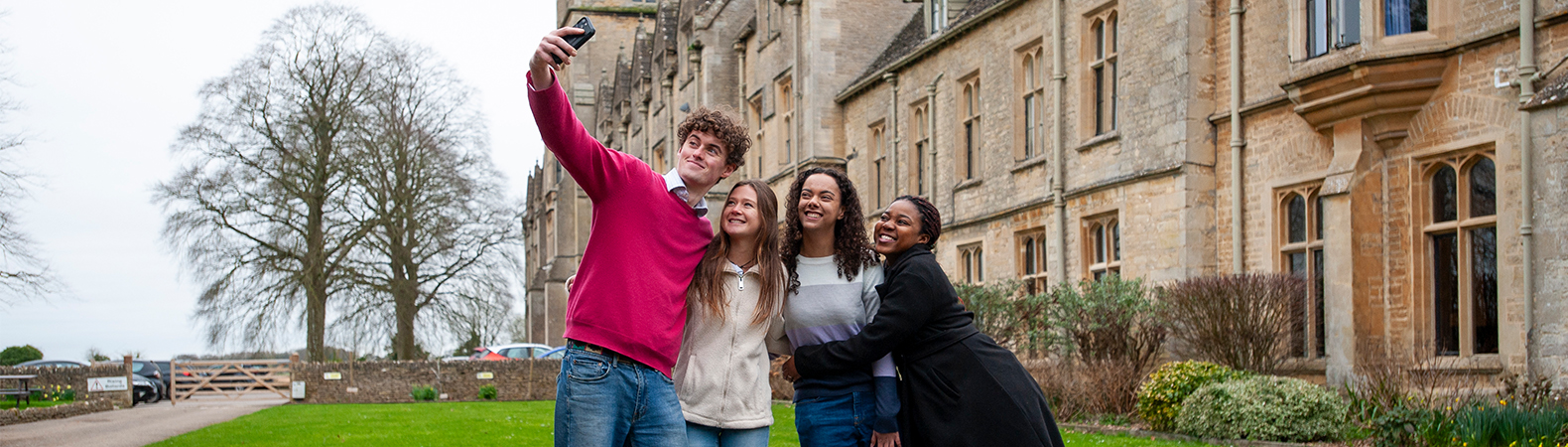
The RAU is also holding a special Clearing Open Afternoon on Saturday 15 August which is an opportunity for prospective students and their families to come and have a look around and find out more about life and study at the specialist university.
RAU Vice-Chancellor Professor Peter McCaffery said: “At the RAU, we pride ourselves on the relevance of our programmes, the employability of our graduates, and the fellowship of our global community of students and alumni.
“We may be more than 180 years old but we are more societally relevant today than ever as we equip a new generation of students to meet the most pressing challenges that face us in the world today, including climate change, food security, sustainable land use, biodiversity loss, and heritage management.”