
RAU event highlights importance of collaboration and innovation to safeguard the future of British beer
8 May 2026
With climate change, rising costs, and supply‑chain pressures threatening the future of traditional British brewing, a recent event at the Royal Agricultural University (RAU) discussed how shared knowledge and innovation is essential to safeguard the future of British beer.
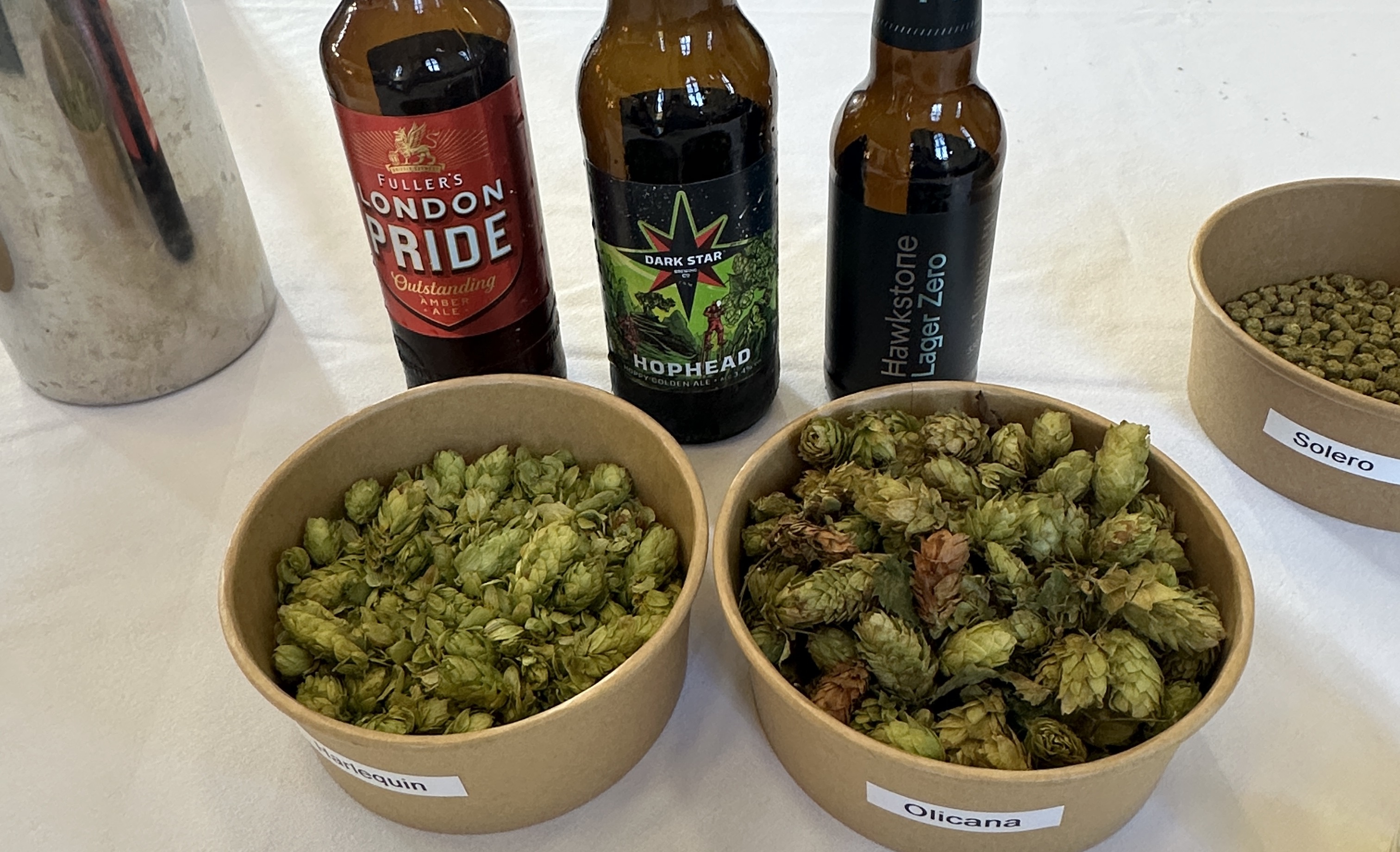
The University’s British Hop & Beer Experience brought together those involved in the UK’s brewing sector, and students and staff at the historic university, to examine the journey of British beer from soil to glass and to look at the future resilience of the UK hop and brewing sectors.
The event highlighted the importance of collaboration across farmers and growers, brewers, researchers, academia, and policy makers to secure a resilient future for British hops and beer at a time when British hops are grown on fewer than 500 hectares nationwide, supported by just 42 growers.
Opening the afternoon, Professor Duncan Westbury, Dean of Land and Property Management at the RAU, emphasised the strategic role of research, education, and industry engagement.
He said: “I am truly delighted that the RAU has hosted this event. It was organised to raise awareness of the issues hop growers face, coupled with what brewers are doing to support British farmers, driving forward sustainability initiatives that all contribute and underpin a sector enjoyed by many.
“The RAU’s vision is to be the UK's global university for sustainable farming and land management; this event united key stakeholders that together can make a difference.”
Hop grower Simon Parker, Director of Charles Faram Farms, gave delegates a detailed overview of hop cultivation in the UK covering the full production cycle, from cloning and training bines through to pest pressure, harvesting, drying, and packing, and highlighted the rising costs and risks faced by the UK’s remaining hop growers.
Simon explained: “From propagation and training through to managing pests, harvesting, and processing, hop production is a highly skilled, labour-intensive operation.
“Alongside the passion and heritage in British hops, growers are operating in an increasingly challenging environment, with rising costs and significant production risks. Supporting UK hop farming is essential if we are to maintain a resilient and sustainable brewing supply chain.”
Rory McAllister, who works as a Tour Guide at Hawkstone Brewery, explored how British barley and hops shape the character of the brand - from premium lagers through to low, and no, alcohol offerings - reinforcing the connection between farming, brewing, and consumer demand.
He said: “Jeremy’s vision is to back British Farming - and that’s what we do. By consuming Hawkstone not only are drinkers backing British brewing, they are also backing British farmers as we use their barley and hops, and even our by-products, such as our leftover barley from our brews, are used for cattle and pig feed as well as fertiliser. The animals love it!”
Asahi UK Sustainability Manager Isabel Ashman outlined how the company is embedding sustainability across its brewing value chain, from ingredient sourcing to energy use, logistics, and packaging. Asahi currently co-funds two RAU PhD studentships to investigate sustainable hop production in the UK.
Sharing Asahi’s commitment to achieving net zero by 2040, Isabel added: “Building a more sustainable future for beer requires collaboration across the value chain. Supporting British hops is a vital part of this and requires action to both build resilience – including investment in research and partnerships between brewers, suppliers and farmers – and to increase consumer awareness of climate impacts on brewing ingredients.”
Steve Livens, Technical & Regulatory Affairs Director for the British Beer & Pub Association (BBPA), gave the wider industry context and presented Brewing Green, the sector’s sustainability roadmap.
He highlighted the economic and social importance of beer and pubs, a sector which supports more than a million jobs and contributes £34 billion to the UK economy, while acknowledging the pressures facing the sector from rising energy costs, regulation, and climate‑related supply risks.
He said: “Sustainability is a driver of innovation, resilience, and long‑term growth for the sector and we’re helping lead from the front by encouraging investment in the future guardians of our sector. Thanks to the Brewers’ Research & Education Fund (BREF), two PhD studentships at the RAU are doing the important work of investigating sustainable hop production in the UK.”
The event concluded with Will Rogers, Group Technical Director at Charles Faram Ltd, delivering a deep dive into hop chemistry, history, and sensory analysis. Covering hop acids, essential oils and aroma compounds, he illustrated how hops influence bitterness, aroma and mouthfeel across beer styles.
He said: “By bringing growers, brewers and researchers together, we help build the knowledge and innovation the sector needs to back British farming, strengthen supply chains, and deliver a more sustainable future from soil to glass.”
Delegates also learned about professional hop and beer assessment, from “rub and sniff” techniques to understanding flavour development in the finished product as well as having the opportunity to taste a range of different beers.
The event, which attracted strong interest from RAU students exploring options for farm diversification, as well as those considering careers in brewing and food production, or looking to setup rural businesses, concluded with a panel discussion and audience question and answer session.
Professor Westbury added: “At the RAU we teach and research all areas of agriculture and, with support from the BBPA’s ‘Brewers’ Research & Education Fund’, Asahi UK, Charles Faram Ltd, and the RAU, we currently have two PhD students investigating approaches to sustainable hop production in the UK.
“This was the first event of its kind and, given its success, we hope it will become an annual event, driving forward innovation in the sector.”