
University’s historic herbarium to be made globally available for education and environmental research
15 July 2026
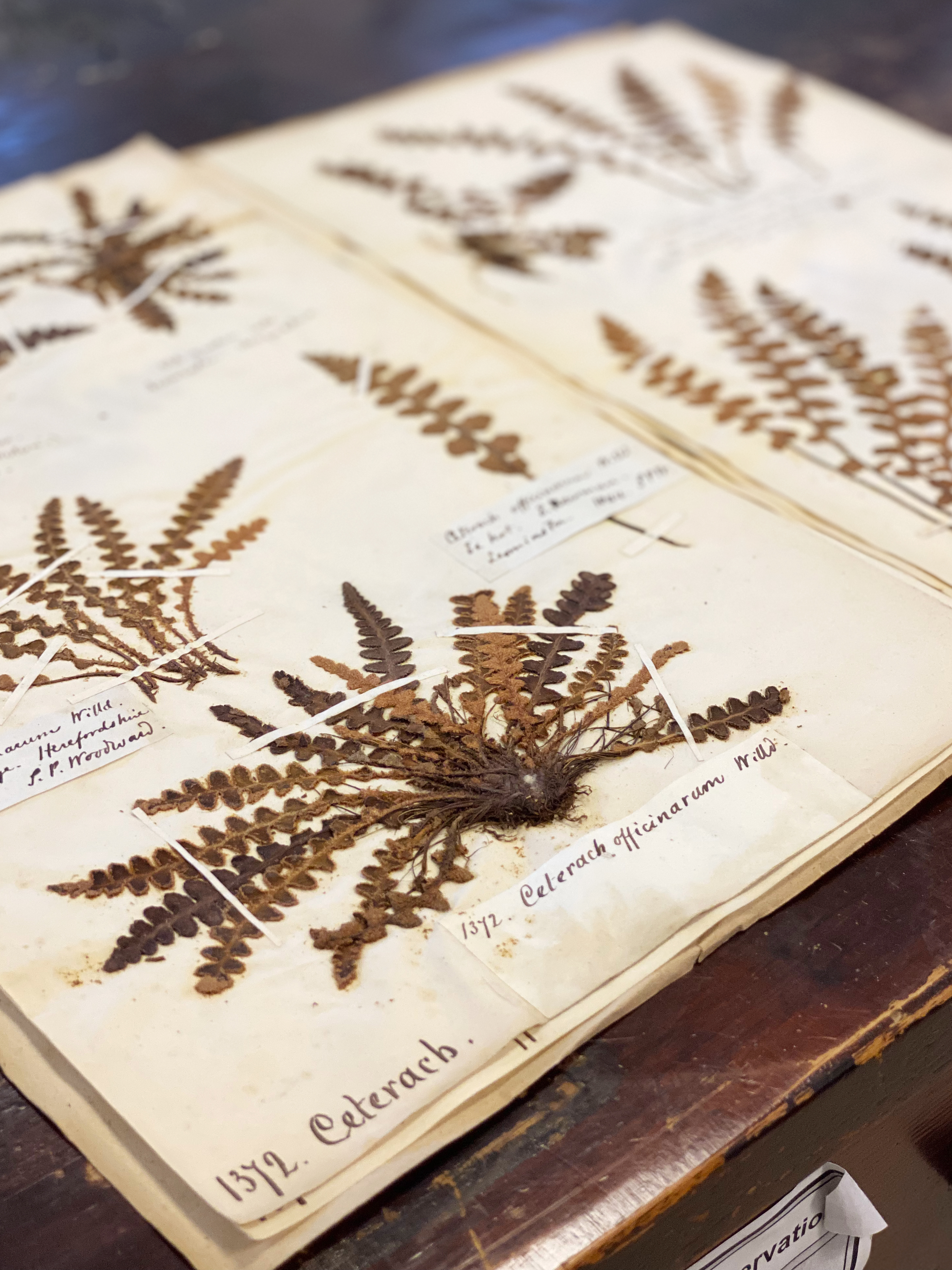
The Royal Agricultural University’s herbarium - a historic collection of more than 10,000 dried and pressed plant specimens which dates back more than 200 years - is set to benefit from a national project to unlock more than a million biological records for climate research.
The University’s unique collection has been included as part of a new project being run by DiSSCo UK (Distributed System of Scientific Collections UK), a £155 million national programme to digitise and connect around 1.1 million natural history specimens from the UK's natural science collections, creating a step-change in how researchers and conservationists access vital biodiversity data.
With specimens dating from as far back as 1797 to as recent as 2008, the RAU herbarium contains specimens of UK species, many of which were collected in and around the local Gloucestershire area, as well as some international specimens from as far away as New Zealand, the USA, and South Africa.
Over the next two years, the project - led by the Universities of Cambridge and Oxford - will establish the Central England DiSSCo UK hub, a strategic network supporting 23 museums and herbaria to prepare their collections for a digital future. The project aims to contribute 1,195,419 specimen records to the national dataset using cutting-edge technologies, including high-throughput imaging and AI.
Having previously been preserved in its original delicate paper format, the RAU collection has recently been digitised, involving transcription of each specimen’s label data including the species name, the place collected, the date and the name of the collector, as well as high resolution digital photographs of each specimen sheet, with the help of funding from Gloucestershire Naturalists’ Society and the University’s own Cirencester Fund.
RAU Associate Professor of Ecology Dr Kelly Hemmings, who has led on the University’s herbarium project, said: “The RAU’s collection is unusual in being an early example established at an agricultural education institution, and even more so as it remains in-situ with us today, and we are delighted that it will be part of the Central England DiSSCo UK hub.
“Environmental learning and research have been important at the RAU since its establishment - as the Royal Agricultural College (RAC) - in 1845, and our participation in this project will allow us to digitally publish our herbarium to the Global Biodiversity Information Facility (GBIF), a worldwide and freely-accessible repository of biodiversity data.”
Many of the specimens in the RAU collection were gathered by the English geologist Samuel Pickworth Woodward who was Professor of Natural History and Geology at the RAC between 1845 and 1848 and was a correspondent of Charles Darwin.
Other examples were collected by Woodward’s successor at the RAC James Buckman who was Professor of Geology, Botany, and Zoology at the RAC from 1848 to 1862. Buckman created a botanical garden at the College where he conducted a number of botanical experiments, some of which are reported to have been mentioned in Darwin’s The Origin of Species.
Dr Hemmings added: “Herbaria are highly valued for their contributions to understanding species classification, identification, and evolution, climate and environment change, as well as applications in the arts, history, education, and outreach.
“Expert botanists have verified the identify of 85% of the specimens in our collection and the digitised database and images currently sit within our own internal university systems and are used for teaching, learning, outreach, and research.
“As well as allowing our collection to really make a global impact in research and education – far wider than the RAU – this project will also place the University within a prestigious knowledge exchange, training, and capacity building network, with the aim of digitally securing the RAU’s natural history collections for the future.”
By digitising these records – including nearly 771,000 newly digitised specimens – the Central England DiSSCo UK hub will provide a high-resolution historical baseline, essential for understanding species turnover and shifts in flowering times (phenology) caused by climate change. These records will also directly support flagship regional restoration efforts allowing conservationists to set recovery targets based on historical evidence.
Zoë Simmons, project co-lead and Head of Life Collections, Museum of Natural History, University of Oxford said: “Through this partnership we will be able to realise our aspirations for data sharing at a global scale. The information released will inform and support research from a diverse portfolio of subjects and researchers, opening the collections to a new era of investigation.”
Jack Ashby, project co-lead and Assistant Director of the University Museum of Zoology, Cambridge, added: “Our collections are already being used heavily in research and active conservation projects by major NGOs. Working directly with county collections, we will further integrate digitisation into regional strategies for biodiversity monitoring and recovery.”
For more information and background about the RAU herbarium, please visit https://www.rau.ac.uk/about-rau/news-and-events/events/unique-hidden-record-uks-historic-biodiversity-links-charles