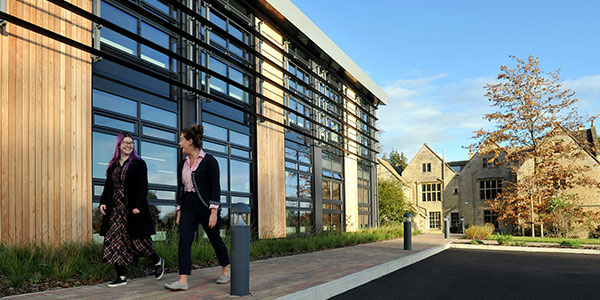
PgCert in Heritage and Archaeology
Heritage and archaeology is not only the study of the past, it is the study of ourselves. Archaeology feeds into current political debates around identity, how we feel about our past, and who we want to be.
This Postgraduate Certificate in Heritage and Archaeology enables students to embark on the first steps of an RAU MSc or PgDip without committing to a particular sector. Completion of the Postgraduate Certificate in Heritage and Archaeology enables students to progress to MSc Heritage and Archaeology, or to exit with the Certificate.
Course overview
The RAU has been at the forefront of land-based education for 180 years, and to study heritage and archaeology here is a natural choice.
If you are interested in studying Archaeology but cannot commit to the full MSc programme then studying for a Certificate (PgCert) may be the route for you. It is designed to give learners a broad and thorough grounding in the challenging and fast-paced archaeology sector. It will equip you with the wider contextual and practical skills to allow you to engage analytically with a variety of archaeological sites and materials. As the course progresses, you will be able to follow your developing interests and tailor the direction of your assessed learning to pursue a variety of archaeology careers. This course provides a more flexible pathway into archaeology, ideal for those who have a particular specialism or area of interest they would like to build upon, or those who wish to gain a broad range of experiences across the sector.
What is a Postgraduate Certificate?
The PgCert - or Postgraduate Certificate - is the shortest of our Masters level offerings, which is completed by studying four modules (60 credits). It allows you to study a specific area of the course in depth but takes less time to complete than the MSc or PgDip.
The PgCert is a great way of fitting postgraduate study around a busy life. Full-time students can complete the course in as little as one year. Part-time students can choose to spread the course up to two years, giving you lots of time for thinking and writing between modules. It is ideal if you want to study a specific subject but would rather not commit to a full MSc with its attendant time and financial costs.
It can be a great way into a career in a new industry but if you desire to continue your studies, PgCert credits can be used to contribute towards a PgDip or even an MSc qualification later down the line. Completing studies using this route is often likened to building blocks – one step at a time – the first step being a PgCert.
*Please note, Visa students must be full-time (a min of 15 hours per week) and will need to attend all sessions in person due to UKVI visa requirements
Course content
Here at the RAU we are always looking for ways to better support our students. We recognise that a number of our students may be working or have caring responsibilities alongside studying which can sometimes make it difficult to attend every teaching session in person. As such we have the ability for you to join lectures and seminars through an alternative digital format in prior discussion with your programme leader. Please note that for international students on a student visa you are expected to attend your classes in person. Remote delivery is not an UKVI authorised mode of attendance for the taught element of your course and therefore non-attendance would affect your student visa.
All sessions are offered in a hybrid format and you can choose whether to attend any session in-person or to participate remotely, as best suits your needs. We do recommend that you attend field trips in-person to get the most from your experience. All in-class sessions are recorded live and made available to students who prefer to access the sessions asynchronously.* The teaching sessions are timetabled on Thursdays and Fridays, with each module being taught 10:00-12:00 and then 13:00-15:00/16:00 on the same day, each week, for the full year (both semesters). This allows you to fulfil other commitments you may have, such as work, family and interests. Full-time students study on both days, with part-time students on just one.
Our sessions are built around exercises to support and scaffold the learning process, and to provide valuable opportunities for peer-to-peer learning. Material is taught in workshop format combining formal elements, such as lectures, with more hands-on exploratory or consolidatory exercises, for example discussions, ‘live’ group research to explore or apply a particular concept, group-critique sessions, supported writing exercises, and problem-based learning.
*Visa students will need to attend all sessions in person due to UKVI visa requirements.
Course structure
All students will take the core Past in Principles and Practice module and can then choose to specialise in either Landscape, Excavation and Post-Excavation, Heritage or Conservation.
Our PgCert is designed to be ultra-accessible. All classes are offered both in person and synchronously online, with session recordings available for students unable to attend a particular session.
Timetables
Timetables are normally available one month before registration.
The in-person teaching sessions are timetabled on Thursdays and Fridays, with each module being taught 10:00-12:00 and then 13:00-15:00/16:00 on the same day, each week, for the full year (both semesters). This allows you to fulfil other commitments you may have, such as work, family and interests. Full-time students study on both days, with part-time students on just one.
Modules
- The Past in Principles and Practice
- Understanding Buildings and Landscapes
- Landscape Archaeology
- Heritage Interpretation
- Practical Conservation, Retrofitting and Sustainability
- Excavation and Post Excavation
* Optional additions to the course will incur additional charges
Disclaimer information
The University has established various rules and regulations that you must agree to and follow if you accept an offer to study with us. View our full disclaimer notice.
Careers and graduate destinations
On completion of the course you will be able to work in commercial archaeology at any of the numerous commercial units, built environment management, planning, regeneration projects, heritage organisations such as Historic England, English Heritage and the National Trust, heritage site interpretation archaeological outreach and education, or as self-employed archaeology consultants.
It also provides an excellent grounding for further academic study, for example at PGDip or MSc level.
"I aspire to pursue a career in Archaeology or Heritage, and I have found the Cultural Heritage Institute to be an excellent resource for acquiring the essential skills and knowledge required for this field."
Maximus Maillard, Student
Entry requirements
We welcome applications from applicants with non-standard qualifications who are able to demonstrate knowledge, experience and skills developed in the workplace or elsewhere and which are relevant to the programme of study. Applicants will need to use their personal statement to provide further details supported by a CV. All non-standard applications will be considered by the Programme Manager on a case-by-case basis and applicants can expect that an interview may be required as part of the admissions process.
If English is not your first language, you will need to reach the requirements outlined in our English language requirements for the level of study. For postgraduate taught programmes this is IELTS Academic min. overall 6.5 with no element below 5.5 (or equivalent). English language tests usually have a validity of 2 years from the date the test is taken.
Offers will typically be made in line with the academic requirements set out above. Offers can be conditional or unconditional. An unconditional offer will be made to applicants who have already met the conditions and provided evidence that conditions have been met. Where academic or language requirements have not yet been fulfilled, applicants will receive a conditional offer stating the requirements that must be met.
Fees
2026-27 Applicants (including January 2027)
For the academic year 2026-27 the tuition fees for this course are:
| UK | *Overseas/EU | |
|---|---|---|
| Full-time | £4,000 per year | £7,350 per year |
| Part-time | Fees are calculated on a pro-rata basis depending on the number of modules taken. Please refer to Tuition Fees webpage | N/A |
*Please note: International students can study on a part-time basis only if they are in the UK with a different type
*Please note: International students can study on a part-time basis only if they are in the UK with a different type of visa (other than Student Visa/Tier 4 General) that allows them to undertake part-time study and their visa does not expire prior to the end date of the proposed course of study. Please check your Visa eligibility before applying.
Please contact admissions@rau.ac.uk before you apply to confirm your eligibility.
Tuition fees may be subject to an inflationary increase each year as set out in our Access and Participation Plan.
For full details, please visit the fees and funding webpage.
Apply now for January 2027
To apply for a postgraduate course you need to complete an online application form. This can be found by selecting your preferred course option at the bottom of this box.
Alternatively, if you cannot access the online form please call Admissions on 01285 889912, or email admissions@rau.ac.uk.
We recommend you keep a copy of the completed form for your records.
Important Information for EU and Overseas applicants for PgCert: The PgCert programme is equivalent to part-time study for UKVI student visa purposes. Please note that the University only sponsors full-time PgDip and MSc level students.
EU and Overseas students who hold another UK immigration status/visa can be considered for the PgCert provided their visa/status allows study at the time of application and covers the entire period of study.
Application deadline, September entry:
- EU and overseas applicants must submit their application by 29 June 2026
- UK applicants must submit their applications by 1 September 2026
Results deadline, September entry:
- EU and overseas applicants will need to meet their conditions by 31 July 2026
- UK applicants will need to meet their conditions by 14 September 2026
Application deadline, January entry:
- EU and overseas applicants requiring a study visa should submit their application by 1 December 2026 at the latest, applications received after this may be considered for September entry
- UK applicants should aim to submit their applications at the latest by 5 January 2027
Results deadline, January entry:
- EU and overseas applicants will need to meet their conditions by 8 December 2026
- UK applicants will need to meet their conditions by 7 January 2027
Applicants will be notified via email once a decision has been made and decision letters will be emailed to you. If there is a deadline by which applicants must accept an offer of admission or pay a deposit, this will be stated in the offer letter.
Requests to defer the year of entry will be considered only when an applicant holds an Unconditional offer and needs to be submitted in writing to the admissions team. We cannot guarantee that requests will be granted. Decisions on deferral requests are considered:
- For September entry at the end of August
- For January entry at the end of January (or later)
If the deferral request is granted applicants will receive a new offer letter with tuition fees which are applicable to their year of entry, at the opening of the next admissions cycle.
Please choose a course from the options below to apply.