
Global Dialogues on Community Land Reform Convened in Perth, Scotland 14-18 June 2026
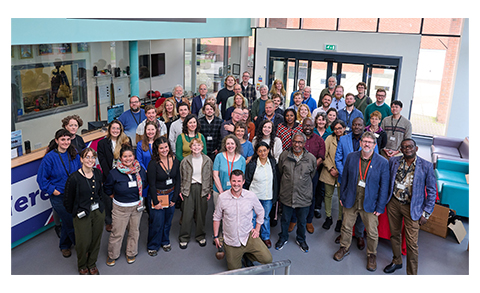 In June 2026, the Reversing the Gaze project held its final residential workshop Reversing the Gaze: Global Dialogues on Community Land Reform. The event took place from 15 to 18 June and was held alongside the inaugural Community Landownership Academic Network (CLAN) Gathering, creating a unique space for dialogue, learning, and collaboration across Scotland, Tanzania and South Africa.
The workshop built on a series of virtual exchanges held during the first two years of the project, and an earlier in-person gathering in Glasgow. Participants came together to reflect on lessons learned, assess ongoing challenges in land reform, and strengthen transnational networks committed to community-centred approaches to land ownership and governance.
A central theme of the workshop was the project’s commitment to “reversing the gaze” by placing perspectives from the Global South at the centre of discussions about land reform. Participants explored how experiences from Scotland, South Africa, and Tanzania revealed common challenges associated with land concentration, market-driven development, colonial legacies, and struggles for social justice.
The programme combined field-based learning with structured academic deliberation. On 15 June, participants visited community-led initiatives in Perthshire, including locations such as Comrie and Cultybraggan. These site visits enabled participants to engage directly with community representatives and gain practical insights into local land ownership and development initiatives. Interestingly, this visits also reveal divergences on the understandings of ‘community’ definition across the three countries. Discussions during travel and field visits encouraged reflection on key workshop themes and fostered stronger connections among participants.
Throughout the week, participants examined a range of critical questions. Discussions focused on the meaning of progress in Scotland’s land reform journey, the strengths and limitations of market-based approaches to land redistribution and ‘community’ empowerment, the role of regulatory frameworks in supporting or constraining community ownership, and the importance of building international solidarity around land justice issues.
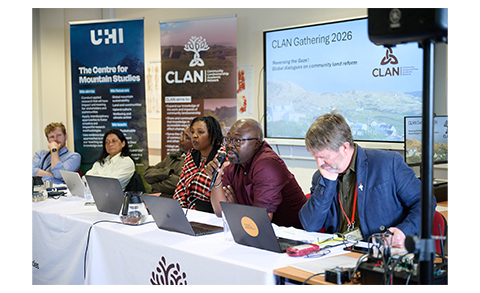
A key highlight of the week was participation in the inaugural CLAN Gathering on 16 and 17 June. The CLAN Conference benefited from the participation of colleagues from South Africa and Tanzania, whose contributions enriched conversations on approaches to community land reform in other contexts. Their experiences highlighted both shared and context-specific dimensions of contemporary land struggles, reinforcing the value of transnational dialogue and comparative learning. Project members contributed to a plenary session titled Reversing the Gaze: Global Dialogues on Community Land Reform. The session featured presentations from Prof. Lungisile Ntsebeza and Ms Lilian Looloitai, alongside contributions from Atenchong Talleh Nkobou, Dr Josh Doble, and Dr Lali Naidoo. The event provided a valuable forum for engagement between activists, academics, policymakers, and community stakeholders working on land ownership issues.
The final deliberation sessions on 18 June provided an opportunity to synthesise insights from field visits, conference discussions, and earlier project activities. Participants collectively analysed experiences across the three country contexts and identified future priorities for research, advocacy, and collaboration. The workshop concluded having strengthened relationships among scholars and activists, deepened understanding of community land reform across different geopolitical settings and generated new insights to inform the project's final outputs. Most importantly, it reaffirmed the project’s commitment to decolonial, community-centred knowledge production and demonstrated the value of international solidarity in addressing contemporary land challenges. Through meaningful dialogue, shared learning, and critical reflection, the Reversing the Gaze project successfully created a platform where diverse experiences of land reform informed a collective vision for more equitable and community-led futures.